

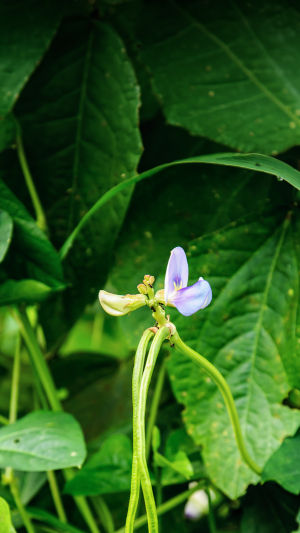
Plants may look passive when insects begin feeding on them, but their defensive strategies can be surprisingly sophisticated. Some produce toxins, others grow physical barriers, and many release airborne chemicals that attract predators of the insects attacking them.
New research suggests that cowpea plants can go even further. After suffering damage from leafminers, they appear to change the soil around their roots in a way that helps the next generation of plants defend itself — even when those younger plants have never been attacked.
<h3>Plants Have Multiple Defenses</h3>
Plants use several techniques to discourage hungry insects and larger herbivores. Tiny hairs can slow small pests, thorns can discourage grazing animals, and chemical compounds can make leaves unpleasant or toxic. Some plants also release special airborne scents known as herbivore-induced plant volatiles, or HIPVs. These chemicals can act almost like an alarm signal.
Instead of directly attacking the pest, the plant releases an odor that attracts natural enemies such as parasitoid wasps. These wasps seek out insects feeding on the plant and can help reduce the damage.
The weakness of this system is that these airborne signals usually disappear once the immediate threat is gone. Researchers therefore wanted to know whether plants could create a longer-lasting form of defense through the soil.
<h3>The Soil May Store Information</h3>
Roots do much more than absorb water and nutrients. Plants continuously release mixtures of compounds into the surrounding soil. These substances, known as root exudates, influence the microorganisms living around the roots. Those microbial communities can then affect plant growth, nutrient uptake and resistance to diseases and pests.
Previous studies had already shown that insect damage to leaves can alter both root chemistry and the composition of soil microbes. What remained unclear was whether those changes could provide a useful defense for plants growing later in the same soil.
<b>The new study suggests that insect attacks can leave a biological imprint underground that survives beyond the original damaged plant.</b>
<h3>Cowpeas Reveal the Effect</h3>
Researchers focused on cowpeas, which are commonly attacked by leafminers. Cowpeas are already known to release airborne signals that attract parasitoid wasps when leafminers begin feeding on their leaves.
To investigate whether this response could extend into the soil, scientists grew new cowpea plants in soil that had previously contained either insect-damaged or undamaged plants. They then examined plant chemistry, gene activity, volatile compounds and changes in the soil microbiome.
The researchers also sterilized soil and reintroduced selected microbial populations, allowing them to test whether microbes were truly responsible for the effect rather than simply associated with it.
<h3>New Plants Gained Protection</h3>
The results showed a striking difference. Cowpeas grown in soil previously occupied by leafminer-damaged plants attracted more parasitoid wasps, even though the new plants themselves had never been attacked. They also grew larger.
That means the original plant’s encounter with insects changed the soil environment in a way that benefited the next generation. Researchers traced this effect through a chain of biological responses beginning with the initial leaf damage.
<h3>A Hormone Starts the Chain</h3>
When leafminers damaged cowpea leaves, the attack activated jasmonate signaling. Jasmonate is an important plant hormone involved in responses to injury and herbivory. This hormonal response caused the roots to release increased amounts of two flavonoid compounds: daidzein and genistein. These compounds then altered the microbial community around the roots. Several types of Bradyrhizobium bacteria became more abundant in the conditioned soil. When new cowpea plants later grew there, those enriched microbes appeared to reactivate jasmonate-related defenses.
The result was greater production of an odor that parasitoid wasps found attractive. <b>In effect, the first plant changed the soil microbiome so that later plants were already better prepared to recruit insect enemies.</b>
<h3>Defense Across Generations</h3>
This mechanism differs from the usual short-lived airborne warning system. A plant normally releases defensive scents when it is currently being eaten. Here, however, the researchers found that plants could attract parasitoid wasps even without any immediate insect attack. The previous generation had effectively prepared the soil.
Researchers described this as a form of plant-soil feedback in which herbivore damage leaves a lasting environmental signature. That defensive influence can therefore extend beyond both the original plant and the period when insects were actually present.
<h3>Microbes Are Essential</h3>
Experiments involving sterilized soil helped demonstrate that the microbial community was a crucial part of the process. Simply having soil that once contained an attacked plant was not enough if the relevant microorganisms were removed. When researchers restored certain bacteria, the defensive response returned. This suggests that plants are not storing the “memory” alone.
Instead, the effect emerges through a partnership between plants, root chemicals and soil microbes. That relationship may represent a previously underestimated part of plant defense biology.
<h3>Possible Benefits for Farming</h3>
The findings could eventually have practical agricultural applications. If certain crops can deliberately shape soil microbes to strengthen natural pest control, farmers might be able to encourage these relationships rather than relying entirely on broad-spectrum insecticides.
A crop could potentially help create soil conditions that make future plants more attractive to beneficial insects. That could support biological pest control while reducing chemical inputs. However, the researchers caution that the experiments involved only one crop and one pest system. It is not yet known whether other plants produce the same effect.
The study also followed the soil legacy for only one cycle, so researchers still need to determine how long the protection lasts. Field experiments will be necessary to test whether the effect survives changing weather, different soil types and repeated planting.
<h3>An Underground Partnership</h3>
The study adds another layer to our understanding of how plants respond to danger. Their defenses are not limited to leaves, thorns or temporary chemical alarms. They can also modify the microscopic ecosystem beneath them.
<b>For cowpeas, an insect attack may leave behind more than damaged leaves. By changing root chemistry and reshaping soil bacteria, one generation can create conditions that help the next grow better and attract natural defenders — turning the soil itself into part of the plant’s protective system.</b>


