

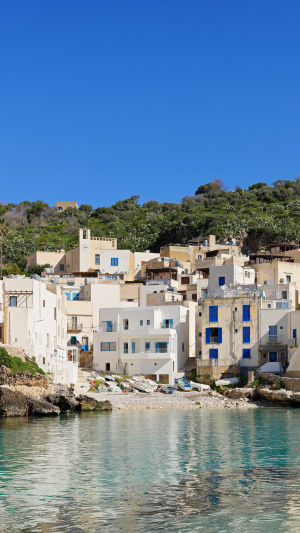
Sometimes the most memorable part of a European trip begins when the road ends. These 5 islands can only be reached by boat, and each offers something different: seafood and swimming in Spain, Irish-language culture, prehistoric cave art in Sicily, camping inside a national park and a car-free Greek escape.
Most can be explored in a day, but staying overnight changes the experience completely once the day-trippers leave. Here is what each island offers, what it costs and what tourists should know before boarding the ferry.
<h3>1. Isla de Tabarca, Spain</h3>
<b>Best for: Swimming and a relaxed seafood lunch</b>
Just off Spain’s Costa Blanca, Tabarca is small enough to explore comfortably on foot. Clear water surrounds the island, with the main sandy beach and several quieter rocky coves providing easy places for swimming and snorkeling.
The historic settlement of Nova Tabarca is enclosed by 18th-century walls, while the less developed side of the island has walking paths leading toward the lighthouse and coastal viewpoints.
Food is part of the attraction. The local specialty is <b>caldero de Tabarca</b>, a traditional fish dish usually served as part of a leisurely lunch.
<b>Getting there:</b> Boats from Alicante take roughly one hour. The much quicker option is Santa Pola, where the crossing takes around 25 minutes.
<b>Price:</b> Ferry fares vary by company and season, but booking a return trip rather than two separate tickets is usually cheaper.
<b>Traveler tip:</b> For a day trip, take an early boat and return in the late afternoon. If you choose the open upper deck on the faster boats, expect sea spray—the crossing can be surprisingly wet.
<b>Best time:</b> May, June or September for warm weather without the heaviest summer crowds.
Isla de Tabarca, Spain
<h3>2. Cape Clear, Ireland</h3>
<b>Best for: Culture, walking and getting off the tourist trail</b>
Cape Clear feels genuinely removed from mainland Ireland. The hourglass-shaped island is part of the Gaeltacht, where Irish remains actively spoken, giving visitors something more than attractive coastal scenery.
Walking routes circle the island through green fields and rugged coastline, while dolphins can sometimes be seen during the ferry journey. Several viewpoints look toward <b>Fastnet Rock</b>, home to its famous lighthouse at Ireland’s southernmost point.
Summer is the liveliest season, when accommodation, restaurants and local attractions operate most consistently.
<b>Getting there:</b> Ferries run year-round from Baltimore, County Cork. Services from Schull are seasonal, operating during summer. Sailings are weather-dependent.
<b>Traveler tip:</b> Outside summer, there may only be one or two suitable sailings per day, so check the return schedule before leaving the mainland. Arrive early in Baltimore because free village parking fills quickly in peak season.
Consider spending one night on Cape Clear if your itinerary allows it. The island becomes especially peaceful once the daytime visitors have departed.
<b>Best time:</b> June to August for the widest choice of ferries, food and activities.
<h3>3. Levanzo, Sicily</h3>
<b>Best for: Ancient cave art and beautiful swimming coves</b>
Levanzo is the smallest of Sicily’s Egadi Islands and an excellent choice for travelers who want beaches and history without a large resort atmosphere.
From the tiny port, trails follow the coast toward coves such as <b>Cala Minnola</b>, where rocky shores meet remarkably clear blue water. Inland and coastal trails also make the island easy to explore on foot.
Its real treasure, however, is the <b>Grotta del Genovese</b>. Inside are prehistoric engravings and paintings, some more than 12,000 years old.
<b>Price:</b> A guided cave visit including transport by boat or off-road vehicle costs <b>€44 for аdults</b> and €37 for children aged 6–11. If you walk to the cave yourself, admission with a guide costs €22 for аdults and €17 for children. Under-fives enter free.
<b>Getting there:</b> Hydrofoils connect Levanzo with Trapani, Favignana and Marettimo. From Trapani, the journey takes roughly 25 minutes.
<b>Traveler tip:</b> Book the cave at least <b>48 hours ahead</b>. The site also specifically recommends securing your hydrofoil seats before paying for the cave tour because summer crossings can sell out. The cave is about 4km, or roughly an hour’s walk, from the village.
If accommodation on Levanzo is unavailable, stay on Favignana and visit for the day.
<h3>4. Illas Cíes, Spain</h3>
<b>Best for: Beaches, hiking and sleeping inside a national park</b>
Off Galicia’s Atlantic coast, the Cíes Islands combine white sand, steep hiking trails and protected wildlife.
Monteagudo and Faro are connected, with the spectacular <b>Praia de Rodas</b> stretching between them. The water looks Mediterranean but feels unmistakably Atlantic—it remains cold even in summer.
For the best views, hike toward the Faro de Cíes lighthouse before returning to the beach.
<b>Getting there:</b> Ferries from Vigo take about 45 minutes.
<b>Price:</b> A return ferry from Vigo currently costs around <b>€27.50 for аdults</b> and €12 for children aged 5–12. Under-fives travel free.
Access is controlled and visitors need a <b>free authorization</b> before purchasing boat tickets.
For something more memorable, stay at the island campground. In the 2026 high season, bringing your own tent costs €11.90 per аdult per night plus €11.90 for the tent pitch. Pre-pitched rental tents start at <b>€74 per night</b> for a simple tent and €105 for a larger one.
<b>Traveler tip:</b> If camping, book the campsite first. Its reservation process helps arrange the required national-park authorization, after which you can purchase ferry tickets.
Staying overnight is particularly worthwhile because the islands become dramatically quieter after the last day-trip ferries leave.
<h3>5. Telendos, Greece</h3>
<b>Best for: A car-free Greek island escape</b>
Separated from neighboring Kalymnos by less than a mile of water, Telendos feels much farther away than the short boat ride suggests.
There are <b>no cars</b>, and the small village sits beneath the steep Rachi mountain. The island is particularly popular with rock climbers, but it also works beautifully for a slow day of swimming, snorkeling and walking.
Underwater remains of the ancient settlement of Potha give snorkelers another reason to explore the coast.
For hikers, the roughly <b>10km circuit of the island</b> offers a memorable finish near Agios Konstantinos chapel, particularly around sunset.
<b>Getting there:</b> Water taxis leave from Myrties on Kalymnos. The crossing takes roughly 10 minutes, with frequent departures during the main season.
<b>Price:</b> The short boat trip can cost around <b>€3 each way</b>, making Telendos one of the cheapest island escapes on this list.
<b>Traveler tip:</b> Come with cash, water and anything specific you need for the day. The island is tiny and deliberately low-key, so do not expect the range of shops and services available on Kalymnos.
<b>Best time:</b> May to October, with June and September particularly good for warm weather and lighter crowds.
<h3>Which Island Is Best for You?</h3>
For an easy day trip with swimming and lunch, <b>Tabarca</b> is the simplest choice. <b>Cape Clear</b> offers the strongest sense of local culture and isolation, while <b>Levanzo</b> wins for history.
For nature lovers, <b>Illas Cíes</b> is arguably the most complete experience because you can combine hiking, beaches and overnight camping inside a protected national park. And if your idea of an island holiday is no cars, minimal planning and a few euros for a boat ride, <b>Telendos</b> is difficult to beat.
All five prove the same point: sometimes the places that require an extra ferry connection are exactly the ones that make a European itinerary feel less predictable.


