

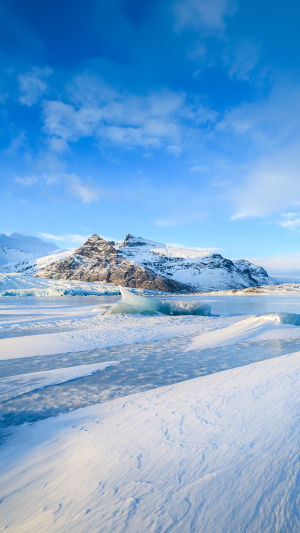
For Lykkers looking for Icelandic scenery that fits the image, Jökulsárlón Glacier Lagoon on the southeast coast is the destination to choose.
Icebergs break away from Breiðamerkurjökull, an outlet glacier of Vatnajökull, and drift through a lagoon framed by mountains and open glacial terrain.
Nearby Diamond Beach adds another perspective, where pieces of ice reach the dark shoreline. This is not a place that needs a packed attraction list. One overnight stay near the lagoon, two well-timed visits, and a few hours of unhurried exploration provide a much better experience than squeezing Jökulsárlón into a rushed Reykjavík day trip.
Jökulsárlón
<h3>Plan Around the Lagoon</h3>
Jökulsárlón changes constantly because wind, tides, weather, and moving ice reshape the view. The most practical strategy is therefore to visit twice rather than expecting one perfectly timed stop.
<b>Give yourself three to four hours</b>
Jökulsárlón lies beside Route 1, roughly 380 km from Reykjavík. Driving directly takes around five hours in favorable conditions, which makes a same-day return unnecessarily exhausting. Höfn, about 80 km farther east, is a much more practical overnight base if Jökulsárlón is part of a South Coast road trip.
The lagoon itself does not require an admission ticket, although passenger-car parking costs ISK 1,110 for the day. The fee remains valid until midnight and allows you to leave and return during the same day.
Allow at least 90 minutes for the lagoon itself. Walk beyond the first viewpoint rather than remaining beside the parking area, because even a short change in position can separate you from larger visitor groups and reveal different clusters of ice.
Then cross toward Diamond Beach and allow another 45 to 60 minutes. The ice changes continuously, so do not expect the beach to look identical to photographs taken earlier. That unpredictability is part of the experience.
<b>Choose winter only for the right reasons</b>
The snowy landscape in the image makes winter tempting, but it changes the practical demands of the trip. Short daylight hours, icy roads, wind, and rapidly changing weather require more flexibility than a summer visit.
If your priority is easier driving and long exploration time, June through August is the simpler choice. If you specifically want snow-covered surroundings and low winter light, consider November through March, but leave spare time in your itinerary rather than scheduling a long drive immediately after visiting the lagoon.
Check Icelandic road conditions and the local forecast before leaving each morning. A clear Reykjavík forecast tells you very little about conditions several hundred kilometres away.
Winter visitors also need waterproof footwear with reliable traction, warm layers, gloves, and a wind-resistant outer layer. The lagoon is primarily an outdoor experience, and standing still beside the water often feels considerably colder than walking.
<h3>Turn One Stop Into a Stay</h3>
The difference between a rushed Jökulsárlón visit and a memorable one is often where you sleep. Staying within reasonable driving distance lets you see the ice under two different light and weather conditions.
<b>Stay toward Höfn</b>
Höfn provides the broadest practical range of accommodation, restaurants, and services east of the lagoon. Rooms vary significantly by season, but budget guesthouses often begin around ISK 18,000–25,000 per night, while comfortable mid-range accommodation commonly reaches roughly ISK 28,000–40,000 or more. Booking earlier matters particularly during summer because southeast Iceland has limited accommodation compared with Reykjavík.
If photography is your priority, accommodation closer to Jökulsárlón costs more but reduces driving. Staying between the lagoon and Höfn creates a useful compromise.
A two-day stop for two people sharing accommodation can reasonably require around ISK 35,000–55,000 per person for one night, meals, parking, and basic road-trip expenses, excluding the rental vehicle and fuel. Optional glacier or lagoon activities increase that total substantially.
Arrive at Jökulsárlón in the late afternoon, explore the lagoon and Diamond Beach, then return the following morning. Two visits give you a better chance of seeing changing ice positions, clearer mountain views, or more interesting light without adding another destination.
<b>Know when to keep your distance</b>
The most important practical rule concerns the ice itself. Icebergs near the shoreline may look completely still, but they can rotate, shift, or break. Keep a sensible distance and remain on established viewing areas rather than trying to reach isolated pieces for photographs.
At Diamond Beach, pay equal attention to the ocean. Do not stand close to the water simply because a piece of ice creates a better composition. Observe wave patterns first and photograph from farther back.
If you want to see the lagoon from the water, seasonal boat excursions provide that option, but availability depends on conditions and time of year. Treat a boat trip as an addition rather than the reason for visiting; the shoreline already provides the essential Jökulsárlón experience.
For Lykkers, the strongest plan is simple: drive the South Coast gradually, sleep near Jökulsárlón or Höfn, and give the lagoon both an afternoon and a morning. You will spend less time chasing stops and more time watching the landscape itself change. That slower approach is exactly what suits this part of Iceland, where blue ice, snow-covered mountains, still water, and moving glacier fragments make the scenery different every time you look.


