

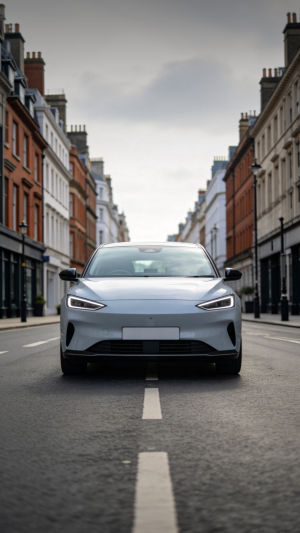
The UK new-car market grew strongly in July 2026, but the most important story was not simply that more cars were registered. It was how quickly the balance between different powertrains continued to change.
A total of 156,571 new cars were registered during the month, up 11.7% from July 2025. Year to date, registrations reached 1,294,499 units, which was 9.5% higher than during the same period a year earlier.
<b>The market is expanding, but the growth is being driven increasingly by electrified models rather than traditional petrol and diesel cars.</b>
<h3>Battery-Electric Cars Surge</h3>
Battery-electric vehicles recorded one of the strongest gains. In July, 43,106 fully electric cars were registered, up 44.5% year on year. Their market share climbed to 27.5%, compared with 21.3% in July 2025.
That means more than one in four new cars registered during the month was fully electric. The year-to-date picture shows the same direction. Between January and July, 327,683 battery-electric cars were registered, 28.7% more than during the same period in 2025. Their share of the market increased from 21.54% to 25.31%.
<b>Electric cars are no longer a niche part of the market. They are becoming one of its main pillars.</b>
<h3>Plug-In Hybrids Grow Even Faster</h3>
Plug-in hybrids also posted strong growth. July registrations rose 33.6% to 23,359 units, giving them a 14.9% share of the market. A year earlier, that figure was 12.5%. Across the first seven months of 2026, plug-in hybrid registrations increased 37.7% to 171,491. This suggests that many buyers are still attracted to a halfway point between electric driving and the reassurance of a combustion engine.
Conventional hybrids also continued to grow, although more modestly. July registrations increased 11.6% to 20,711 units, while their market share remained steady at 13.2%.
<h3>Diesel Continues to Shrink</h3>
Diesel remained the weakest major segment. Only 6,596 diesel cars were registered in July, down 17.7% from the previous year. Its share of new registrations fell to just 4.2%. Year to date, diesel registrations were down 11.4% to 59,144 units. That leaves diesel increasingly confined to a small part of the new-car market, particularly compared with its dominance a decade ago.
<h3>A Market in Transition</h3>
The July figures show that the UK is not simply buying more cars. It is buying a different mix of cars. Fully electric and plug-in hybrid registrations are rising sharply, conventional hybrids are holding steady, and combustion-only models are losing ground.
The key question now is whether this momentum can continue as EV sales targets become more demanding and manufacturers face pressure to keep prices competitive.
<b>For buyers, the practical result is simple: the British new-car market is becoming more electrified with every month, and the gap between old and new powertrains is widening quickly.</b>


