

Gal Gadot leads The Runner, a new Prime Video thriller built around a simple high-stakes premise: keep moving, follow instructions and save a kidnapped child. Directed by Kevin Macdonald, the 84-minute film unfolds largely in real time and turns central London into the setting for a relentless chase.
Yet despite its speed, the story rarely develops the tension or emotional weight its concept promises.
<h3>A Race Across London</h3>
Gadot plays Maia Marten, a successful London lawyer and single mother. During a routine morning run after dropping off her son Noah, played by Rory Wilmot, she receives a call from a mysterious man who tells her that the boy has been kidnapped.
The situation becomes even more urgent because Noah has diabetes. His captor can monitor his glucose levels and uses that vulnerability to force Maia into following a series of increasingly dangerous instructions.
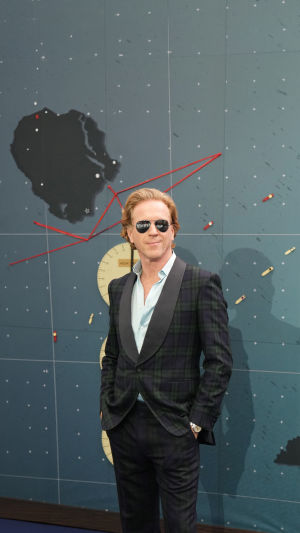
The Caller, played by Damian Lewis, gives Maia one hour to cross the city and find a key witness connected to a criminal case she is due to prosecute. Refusing to cooperate, contacting the authorities or failing to reach her destination in time could put her son’s life at risk.
<h3>Movement Without Enough Tension</h3>
The film relies heavily on its real-time structure, with Maia running through streets, stations and other parts of London while remaining in constant contact with her captor.
Macdonald and cinematographer Anthony Dod Mantle use rapid editing, handheld camerawork and changes in frame rate to create a frantic visual style. At its strongest, this approach produces genuine momentum. One sequence, in which Maia must race between Underground stops before a train arrives, stands out as one of the film’s most effective action moments.
The problem is that the same intensity is maintained almost continuously. Without enough quieter moments to build character or establish a stronger sense of place, the constant movement can make the action feel less urgent rather than more exciting.
<h3>A Difficult Premise to Believe</h3>
The central plot also demands considerable suspension of disbelief. Instead of carrying out the crime themselves, the villains force Maia — a lawyer directly connected to the case — to assassinate the witness whose testimony could threaten them.
The film introduces ideas about technology, surveillance and dependence on smartphones, with Maia’s phone functioning both as her connection to her son and as the mechanism through which she is controlled. However, these themes remain secondary to the chase itself.
Hints about Maia’s troubled family history also appear, but the compact running time leaves little opportunity to develop them into a deeper emotional storyline.
<h3>Gadot Carries the Film</h3>
Gadot spends much of the film alone on screen, making her performance central to whether the story works. Physically, the role demands constant movement, panic and exhaustion, but the screenplay gives her relatively few opportunities to explore Maia beyond the immediate crisis.
Lewis faces a similar limitation. His character is largely experienced through phone conversations, functioning more as a threatening voice that drives the plot than as a fully developed antagonist.
The Runner has the ingredients of an efficient streaming thriller: a recognisable star, a ticking clock, a major city and a straightforward rescue mission. What it lacks is enough character development and convincing suspense to make all that movement feel genuinely dangerous.
At 84 minutes, the film never overstays its welcome, but its rapid pace cannot entirely disguise how thin the story is. The result is a thriller that keeps running from beginning to end without always giving the audience a compelling reason to race alongside it.


