

Hello, Lykkers! Welcome to Washington, D.C., a capital city that quietly breaks the rules.
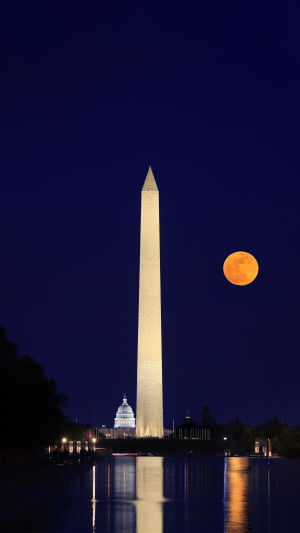
Some capitals cost a fortune. In Washington, D.C., the National Mall is free, world-class museums cost nothing, and you can end the day watching the Washington Monument and the Capitol glow against a deep blue sky.
The city is compact, walkable, and surprisingly generous with its best experiences. Here are seven places worth building your visit around, with practical details to help you plan.
<h3>1. The National Mall</h3>
The National Mall is the central green space where most of the city's landmarks are found. It stretches for nearly three kilometers, from the Washington Monument to the US Capitol, with memorials and reflecting pools in between.
Walking the full length takes a few hours, so plan your route. Early morning is the quietest time, and dusk is the most atmospheric, when the monuments are lit and the sky turns deep blue behind them. The Mall is free and open at all hours, and comfortable shoes are essential.
<b>Estimated Cost:</b> Free
<h3>2. Washington Monument</h3>
The Washington Monument is the tall obelisk that defines the city's skyline. It stands at the center of the National Mall and offers some of the best views in Washington from its observation level. Tickets for the elevator ride to the top are free but require a timed reservation, and they can book out quickly during peak seasons. If you cannot get tickets, the monument is still worth visiting from the outside, especially at dusk when it is illuminated.
<b>Estimated Cost:</b> Free, timed tickets required
<h3>3. US Capitol</h3>
The US Capitol sits at the eastern end of the National Mall, with its iconic dome visible from across the city. Free guided tours are available and cover the building's history, art, and architecture. Advance reservations are recommended, especially during busy periods. The surrounding grounds and the nearby Library of Congress are also worth a look. Allow about two hours for a visit.
<b>Estimated Cost:</b> Free, reservations recommended
<h3>4. Smithsonian's National Air and Space Museum</h3>
This is one of the most popular museums in the city, and entry is free. It houses historic aircraft, spacecraft, and exhibits on flight and space exploration. Because it is so popular, arriving near opening time gives you the best chance of avoiding long lines. Some sections may require timed entry passes, so check ahead before you go. Plan at least two hours.
<b>Estimated Cost:</b> Free (cost may vary for special exhibits)
Smithsonian's National Air and Space Museum
<h3>5. Smithsonian National Museum of Natural History</h3>
Another free Smithsonian museum, this one covers dinosaurs, gems, and the natural world. Highlights include the Hope Diamond and a large collection of fossils. It is a good choice for families and for anyone who wants a break from outdoor walking. The museum can get crowded in the middle of the day, so morning visits are usually calmer.
<b>Estimated Cost:</b> Free
<h3>6. Lincoln Memorial</h3>
The Lincoln Memorial sits at the western end of the National Mall and is one of the city's most recognizable landmarks. The large seated figure of Abraham Lincoln looks out over the Reflecting Pool, and the surrounding columns and steps make it a powerful place to visit. It is open 24 hours a day, and it is especially striking at night when the interior is lit. This is a good final stop if you are walking the Mall at dusk.
<b>Estimated Cost:</b> Free
Lincoln Memorial
<h3>7. Georgetown Waterfront</h3>
Georgetown offers a different side of Washington, with historic streets, shops, and a lively waterfront along the Potomac River. It is a pleasant place to walk, eat, and watch boats go by. The neighborhood is reachable by bus or a longer walk from the Mall. It works well as a half-day break from the monuments, and there is no entry fee to explore.
<b>Estimated Cost:</b> Free to explore
<h3>Final Thoughts</h3>
Washington, D.C. rewards planning, but it does not demand a big budget. The National Mall, the monuments, and most Smithsonian museums are free, and the Metro makes it easy to move between them. Wear comfortable shoes, start early, and give yourself time to walk rather than rush. Whether you come for the history, the museums, or the evening skyline, the city offers plenty to see without costing much at all.


