

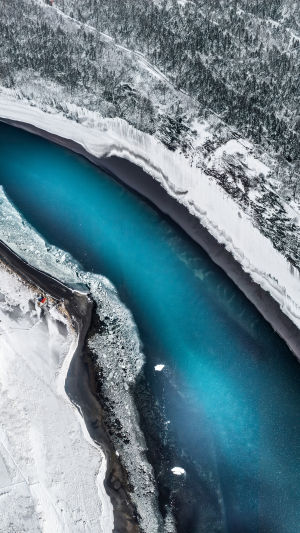
Hello, Lykkers! Imagine standing on black volcanic sand while icebergs the size of buildings drift past you like silent ships.
That's not a dream—it's Jökulsárlón, and it's just one corner of Vatnajökull National Park, a protected wilderness covering nearly 14% of Iceland.
This is Europe's largest ice cap outside Greenland, and it offers experiences you won't find anywhere else on the planet.
Here are six places that make this region unforgettable.
<h3>Jökulsárlón Glacier Lagoon: The Crown Jewel</h3>
Jökulsárlón is Iceland's deepest lake, plunging to 248 meters, and it's filled with icebergs that calve from the Breiðamerkurjökull outlet glacier.
The ice here isn't just white—it's streaked with electric blue and black volcanic ash from ancient eruptions. You can walk the shoreline for free, or join a boat tour to get closer to the ice. Amphibian boat tours operate from May to October, and kayaking is available in summer for a quieter experience.
Seals are frequently spotted resting on the ice or swimming in the lagoon. There's no entrance fee, only a parking fee of about US$8 per vehicle that covers both Jökulsárlón and Diamond Beach (prices may vary).
<h3>Diamond Beach: Where Ice Meets Black Sand</h3>
A short walk across the road from Jökulsárlón brings you to Breiðamerkursandur, better known as Diamond Beach. Here, icebergs that have drifted out of the lagoon wash ashore on jet-black volcanic sand, creating a stunning contrast of crystal-clear ice against darkness. The "diamonds" change constantly—each wave brings new pieces and carries others back to sea.
For the best chance of seeing stranded ice, visit during low tide, and aim for early morning or late evening for golden light and fewer crowds. Winter months from November to March offer the most icebergs, though ice can appear year-round depending on conditions. Access is included with the Jökulsárlón parking fee.
<h3>Skaftafell: Waterfalls and Glacier Views</h3>
Skaftafell is the park's most accessible area, about 35 minutes west of Jökulsárlón by car. The signature hike here leads to Svartifoss, a waterfall framed by dramatic hexagonal basalt columns that inspired Iceland's famous architecture. The trail is roughly 3 kilometers round trip.
Another rewarding option is the Skaftafellsjökull trail, a 3.7-kilometer round trip that takes you to the edge of a glacier tongue—one of the closest approaches to ice you can make without a guide. The visitor center here is open year-round and can help you choose trails based on weather and fitness. Parking costs about US$8 per vehicle, and you get a 50% discount at Jökulsárlón if you visit both on the same day (prices may vary).
Skaftafell
<h3>Fjallsárlón: The Quieter Lagoon</h3>
Most visitors stop at Jökulsárlón and never make it to Fjallsárlón, just a short drive west. This smaller lagoon offers a more intimate experience, with the Fjallsjökull glacier descending almost directly into the water. The setting is less crowded, and the perspective on the ice is different—you're closer to the glacier face here. There's a restaurant on site with views over the lagoon, making it a good lunch stop.
A hiking trail connects Jökulsárlón, Breiðárlón, and Fjallsárlón, taking about five hours to complete the full route if you want to see all three lagoons in one day. There is no entrance fee for the lagoon area.
Fjallsárlón
<h3>Ice Caves: Winter's Hidden Cathedrals</h3>
From mid-October to April, the outlet glaciers of Vatnajökull reveal ice caves—hollow chambers sculpted by meltwater that glow with surreal blue light. These caves are only accessible with a guided tour, and for good reason: each cave is inspected for stability before visitors enter. The Crystal Ice Cave beneath Breiðamerkurjökull is one of the most famous, but several operators run tours from Jökulsárlón.
This is a seasonal experience, and conditions change every year, so book through a reputable company that prioritizes safety. Guided ice cave tours typically range from about US$150 to US$250 per person depending on duration and group size.
<h3>Glacier Hiking on Falljökull or Breiðamerkurjökull</h3>
Walking on a glacier is one of Iceland's signature experiences, and Vatnajökull offers some of the best access. Guided glacier hikes depart from near Jökulsárlón and Skaftafell, with tours running year-round. You'll be fitted with crampons and an ice axe, then led onto the ice to see crevasses, ash layers, and ice formations up close. A typical three-hour tour covers 5 to 7 kilometers on the ice.
Falljökull is one of the few outlet glaciers accessible on foot, though many tours use super jeeps to reach the glacier edge. Standard glacier hikes start from roughly US$120 to US$180 per person, with longer or more technical routes costing more.
<h3>Final Thoughts</h3>
Vatnajökull National Park is not a place you can rush. The distances are vast, the weather changes quickly, and the experiences—walking on ancient ice, watching icebergs drift to sea, standing on black sand as "diamonds" wash ashore—deserve time.
Whether you base yourself in Höfn or Hali, or simply stop along the Ring Road, these six places offer a glimpse into a landscape shaped by fire and ice. Bring waterproof layers, sturdy boots, and a sense of wonder. This is Iceland at its most elemental.


