

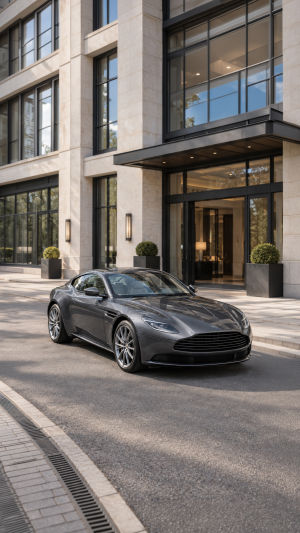
Europe's luxury automotive industry is facing growing competition as Chinese manufacturers introduce sophisticated electric vehicles designed to attract customers traditionally loyal to German brands.
At the 2026 Paris Motor Show, newcomers showcased premium models equipped with rapid charging, intelligent driving assistance and advanced comfort features. Their arrival signals a broader shift in the industry, where digital technology is becoming an increasingly important part of the luxury experience.
<h3>Why Chinese Carmakers Are Turning To Europe</h3>
Intense competition in China's domestic automotive market is encouraging manufacturers to explore more profitable opportunities overseas.
Europe represents an attractive destination because of its established premium vehicle market and strong demand for technologically advanced cars.
BMW, Mercedes-Benz, Audi and Porsche collectively sold nearly two million vehicles in Europe during the first nine months of 2026.
Chinese manufacturers have already expanded their presence in the continent's mainstream market with affordable electric and hybrid vehicles. They are now targeting wealthier customers who might consider alternatives to traditional luxury brands.
However, convincing European buyers to switch manufacturers presents a significant challenge, particularly when established companies benefit from decades of customer loyalty.
<h3>Advanced Technology Takes Centre Stage</h3>
Chinese brands are promoting a vision of luxury centred on intelligent systems, connectivity and passenger comfort.
At the Paris Motor Show, Avatr, a premium brand belonging to Changan, introduced an electric saloon and SUV with starting prices of approximately €60,000.
The vehicles feature rapid-charging technology and comfort equipment, including massage functions for every seat.
Aito, developed by Seres with technology from Huawei, also presented four premium SUVs while highlighting advanced driver-assistance capabilities.
These features reflect an attempt to appeal to buyers who increasingly associate expensive vehicles with convenience, innovation and sophisticated digital experiences.
European manufacturers are developing similar technologies, although their marketing continues to emphasise craftsmanship, design and established reputations.
<h3>Expansion Plans Gather Momentum</h3>
Chinese premium manufacturers are gradually establishing themselves across European markets.
Geely-owned Zeekr sold 9,525 vehicles in Europe during the first nine months of 2026, compared with 3,025 over the same period in 2025.
The company has expanded into 22 European markets and is planning further growth.
Xpeng has also reported stronger demand, with European sales more than doubling to over 29,000 vehicles during the first eight months of 2026.
Meanwhile, Avatr plans to enter Spain, the United Kingdom and Denmark in 2027, followed by Germany and additional markets in 2028.
Aito has announced plans to begin European sales in autumn 2027.
<h3>Building Trust Remains A Challenge</h3>
Technology alone may be insufficient to establish a successful luxury brand.
European customers also consider reliability, resale values, dealership networks and long-term maintenance costs before purchasing an expensive vehicle.
Chinese manufacturers must therefore invest in customer service, spare parts availability and brand recognition alongside vehicle development.
Competition may also encourage established manufacturers to accelerate innovation and reconsider pricing strategies.
For European consumers, the expanding range of premium electric vehicles could bring greater choice and improved features. The longer-term success of Chinese newcomers will depend on whether their technological advantages can translate into lasting customer confidence.


