

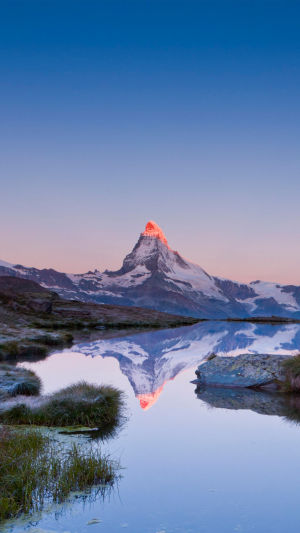
Hi there. You've seen the Matterhorn on a thousand postcards and chocolate wrappers, so you probably think you already know it.
But the real thing is stranger and better than the photos suggest, and getting there takes more planning than most people expect.
<h3>Why this peak earns the trip</h3>
The Matterhorn is 4,478 meters of near-symmetrical rock, and it sits right on the border between Switzerland and Italy. You don't need to climb it to feel it. The pyramid shape means it looks different from every angle, and that's the whole point of moving around it.
From Zermatt you get the classic north face view. From the Italian side at Breuil-Cervinia you see a broader, softer profile. Plenty of people pick one and stop there. Do both if you can, because the mountain genuinely changes character.
<h3>The views worth paying for</h3>
Two named viewpoints do most of the work. Gornergrat, reached by a cog railway from Zermatt, puts you at 3,089 meters with the Matterhorn on one side and the Gorner Glacier on the other. A return ticket runs around 100 to 130 USD depending on the season.
Then there's Glacier Paradise on the Klein Matterhorn, the highest cable car station in Europe at 3,883 meters. That one costs roughly 110 to 150 USD return. It's cold up there even in summer, so pack a layer.
Matterhorn
<h3>Getting there and getting around</h3>
Zermatt is car-free, which surprises a lot of first-timers. You drive or take a train to Täsch, park in the big garage there (about 16 to 20 USD per day), then ride the shuttle train the last 12 minutes into town. From Zurich the full train trip takes around 3.5 hours with a change in Visp. Once you're in Zermatt, everything is walkable or covered by electric taxis and the local bus.
<h3>Timing your visit</h3>
July through September is hiking season, and the trails above town, including the Europaweg toward Randa, are open and marked. Winter flips the whole place into a ski resort with lifts running from December into April. Book your Gornergrat or Glacier Paradise ticket a day ahead in peak summer, since the midday departures fill up. Early morning gives you the clearest air and the smallest crowds.
<h3>What to budget and what to skip</h3>
A mid-range hotel room in Zermatt runs about 200 to 350 USD a night in summer, and budget guesthouses start nearer 120 USD. Meals add up fast in a resort town, so plan on 30 to 50 USD for a simple dinner.
One practical tip: buy a Zermatt lift pass only for the days you'll actually use it, because the network is huge and a weekly pass rarely pays off for a short stay. And skip the souvenir shops right by the station, the ones a few streets back charge less for the same thing.
The Matterhorn rewards you most when you give it two different vantage points and a clear morning. Pick your base, buy the one ticket that matters to you, and let the mountain do the rest.


