

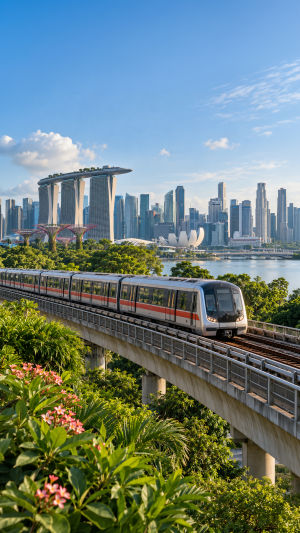
Singapore has one of the easiest transport systems to navigate in Asia. Its compact size, extensive rail network and clear English-language signs make moving between the airport, major attractions and different neighborhoods surprisingly straightforward.
For most visitors, the MRT is the quickest choice, while buses are useful for shorter journeys and places away from train stations. Walking, taxis and ride-hailing services provide plenty of additional flexibility.
<h3>Use The MRT For Most Trips</h3>
The Mass Rapid Transit system connects almost every part of the city travelers are likely to visit, including Marina Bay, Chinatown, Little India, Orchard Road and the areas around Singapore's major attractions.
Adults fares are calculated according to distance. A typical journey costs around €0.90 for a short trip and up to approximately €1.80 for longer journeys across the network.
Contactless bank cards and mobile wallets can be tapped directly at MRT gates, removing the need to buy a separate transport card. Travelers using a foreign-issued bank card should keep in mind that an additional administrative charge of about €0.40 may apply for each day the card is used.
<h3>Take Buses Around The City</h3>
Singapore's extensive bus network reaches areas that are less convenient by MRT and can also provide a more scenic way to see the city.
The payment system is simple: passengers tap their card or mobile device when boarding and again when leaving. Fares are distance-based, so buses generally cost roughly the same as MRT journeys.
Cash can still be used on basic bus services, but it is less convenient and more expensive. Depending on the distance, a cash journey currently costs approximately €1.45–€2.25.
Buses are particularly useful when visiting residential neighborhoods, parks or attractions that would otherwise require a walk from the nearest station.
Singapore
<h3>Consider A Tourist Pass</h3>
Travelers expecting to use trains and buses repeatedly may prefer a Singapore Tourist Pass, which provides unlimited travel on standard MRT, LRT and basic bus services.
A one-day pass costs about €12, while two days cost around €17 and three days approximately €20. Longer options cost about €26 for four days or €31 for five days.
Multi-day passes must be used on consecutive days, and one day of validity lasts until public transport finishes operating rather than for a full 24 hours.
For visitors making only three or four journeys daily, paying individually can still be cheaper.
<h3>Use Taxis For Convenience</h3>
Taxis are a useful alternative when traveling with luggage, returning late at night or heading somewhere without a convenient public transport connection.
Standard taxis begin at roughly €3–€3.60 before distance and time charges are added. Peak-hour, late-night and location surcharges can increase the final fare.
Trips starting at Changi Airport carry an additional surcharge of approximately €4.20–€5.60, depending on the time of day. Evening and overnight journeys can also cost noticeably more.
Ride-hailing apps are widely used as well, with the full estimated price usually displayed before confirming the booking.
<h3>Explore Neighborhoods On Foot</h3>
Walking remains one of the best ways to experience individual districts. Chinatown, Little India, Kampong Glam and Marina Bay all contain clusters of attractions that can easily be explored on foot.
The main challenge is Singapore's tropical weather. Heat and humidity can make even relatively short walks tiring, while heavy rain may arrive with little warning.
Fortunately, sheltered walkways and underground connections are common around busy areas. Combining walking with short MRT journeys usually provides the best balance between sightseeing and comfort.
<h3>Choose The Simplest Option</h3>
Renting a car is rarely necessary for a typical visit. Public transport is inexpensive, frequent and connected closely enough to cover most sightseeing itineraries.
A traveler relying mainly on trains and buses can often keep daily transport spending below €10, unless using unlimited passes or taxis frequently.
For most visitors, the simplest strategy is to take the MRT for longer distances, buses for local connections and walk once inside each neighborhood. With a little planning, getting around Singapore becomes one of the easiest parts of the trip.


