

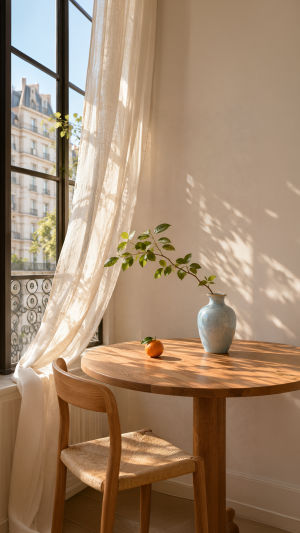
Hello, readers. A round dining table looks like the easy choice: one shape, no corners to argue over.
But walk into any furniture showroom and you'll find forty of them, and they are not the same object. The diameter changes who fits. The material changes how the surface ages. The base decides whether your knees survive dinner.
<h3>Size decides the room, not the look</h3>
A round table's real number is its diameter, and that number sets everything else. A 36-inch table seats two comfortably, maybe three if you squeeze. A 48-inch table handles four without elbows touching. You need roughly 60 inches of clearance from the table edge to the nearest wall or counter for a chair to pull out and someone to walk behind it. Measure that gap before you fall for anything. Plenty of people buy a 54-inch top for a small dining nook and discover the chairs hit the wall on day one.
<h3>Solid wood earns its price</h3>
Wood is the material that improves with use, if you pick the right one. Oak and ash take a beating and hide it well, which is why so many restaurant tables are oak. Pine dents if you look at it wrong. Walnut is softer than oak but finishes beautifully and costs noticeably more, often two to three times the price of a comparable oak top. Watch for veneer described as solid: a thin wood layer over particleboard will not survive a spilled glass left overnight, while a genuine solid top can be sanded and refinished years later.
<h3>Glass and stone change the room</h3>
Glass tops make a small dining space feel bigger because you see the floor through them, and a 48-inch glass table genuinely reads lighter than the same size in oak. The tradeoff is maintenance. Every fingerprint shows, and you'll be wiping it after meals. Stone, meaning marble or quartz, handles heat and scratches well but weighs a lot, so check the base can carry it and check your floor can take the load. A marble top on a spindly pedestal is a wobble waiting to happen.
<h3>The base shapes your seating</h3>
Pedestal bases, one central column, give you the most legroom and let people sit anywhere around the edge. That flexibility is the whole point of a round table. Four-leg bases look sturdier and often are, but the legs land exactly where feet want to go. Trestle and cross bases sit in between. If you host often and people shift seats mid-meal, a pedestal wins. If the table doubles as a desk and gets leaned on, four legs hold up better over years of use.
<h3>Extendable rounds solve the holiday problem</h3>
Most round tables cap out at six, which is fine until a birthday dinner. Extension rounds split in the middle and add a leaf, turning a 48 inch table into a 66 inch oval for the evening. The mechanism matters more than the leaf. Butterfly leaves fold and store inside the table, so you never hunt for them in a closet. Loose-leaf versions are cheaper but you will store that leaf somewhere, and it will be in the way.
Think about your actual week before you buy: how many people sit down on a normal Tuesday, how much floor space you have behind the chairs, and whether the surface needs to survive kids, laptops, or both. Get the diameter and the base right and the material becomes a preference rather than a problem. Go measure your space first, then go shopping.


