

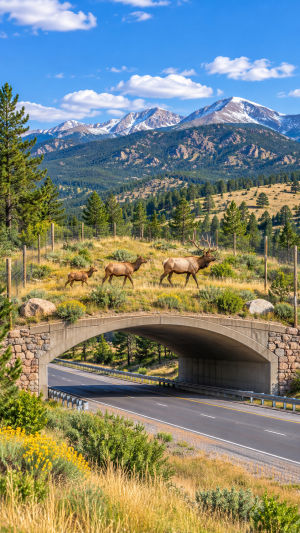
Highways can divide landscapes almost as effectively as walls. For migrating animals, crossing six lanes of fast-moving traffic can turn an ordinary seasonal journey into a dangerous gamble.
Colorado has spent years trying to solve that problem along Interstate 25. The result is a network of fencing, underpasses and a massive wildlife bridge that is already producing striking results.
<h3>A Dangerous Stretch Has Changed</h3>
The project focuses on an 18-mile section of I-25 between Castle Rock and Monument. More than 100,000 vehicles use parts of this corridor every day, while the surrounding landscape includes around 39,000 acres of wildlife habitat. Elk, mule deer and pronghorn regularly move between seasonal feeding grounds, forcing them toward the interstate.
Before mitigation measures were installed, wildlife collisions could occur almost daily during peak spring and autumn migration periods. The new system has changed that pattern dramatically.
<h3>Collisions Fell By 91 Percent</h3>
Between 2022 and 2024, wildlife-vehicle crashes along the treated section declined by about 85% per year on average.
By the final year of that period, the reduction reached 91%. Since the newest overpass opened in December 2025, only a small number of collisions have been reported along the protected corridor. The improvement comes from combining several tools rather than relying on one bridge.
Tall fencing prevents animals from wandering directly onto the road and guides them toward designated crossing points. Five underpasses provide additional routes beneath the interstate.
<h3>The Overpass Is Enormous</h3>
The Greenland Wildlife Overpass fills a remaining 3.7-mile gap between existing crossings. It measures about 200 feet wide and 209 feet long, covering almost an acre above six lanes of traffic. The wide, open design is particularly important for large animals such as elk and pronghorn, which often avoid narrow enclosed structures.
Cameras have already captured both species using the bridge. Pronghorn have also been recorded reaching habitat west of the interstate that had been difficult for them to access for decades.
<h3>Small Animals Matter Too</h3>
The bridge is not designed only for large mammals. Logs and other natural features have been added to create cover for smaller species moving across the exposed surface. Rabbits and northern leopard frogs have already been observed using the crossing.
Designers also hope the structure will support threatened small mammals by offering hiding places from predators such as coyotes and hawks. Vegetation will gradually make the bridge look and function more like the surrounding habitat.
<h3>Drivers Benefit As Well</h3>
The project is also a road-safety investment. Collisions with deer or elk can cause serious injuries, vehicle damage and lengthy traffic delays.
Along this part of I-25, reduced wildlife crashes have contributed to an estimated 9% decline in traffic delays. Colorado transportation officials say well-designed wildlife crossings can reduce collisions by around 80–90% and may eventually pay for themselves through avoided crash costs.
<h3>Colorado Plans More Crossings</h3>
The state is now developing additional wildlife projects on several major highways. A new funding program beginning in 2027 will allow drivers to contribute an optional €4–€5 equivalent through annual vehicle registration fees.
The money will support new crossings, fencing and habitat connections. Colorado’s experiment shows that roads and wildlife corridors do not have to remain permanent rivals. Giving animals a safe route across a highway can protect migration patterns while also making everyday travel safer for humans.


