

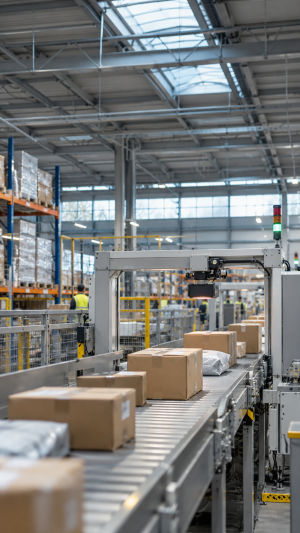
The European Union introduced a new €2 customs handling fee on 1 November 2026 for goods purchased online from sellers outside the bloc and shipped directly to European consumers. The measure is designed to help cover the growing administrative costs of processing international e-commerce shipments while improving product checks and customs supervision.
The charge forms part of a wider effort to modernise European customs procedures. The rapid growth of low-value online purchases has increased the number of individual parcels entering the single market, creating additional work for customs authorities and intensifying competition for European retailers.
<h3>How the New €2 Fee Works</h3>
The handling fee applies to imported e-commerce shipments regardless of their declared value. However, it is calculated according to the categories of goods inside a package rather than simply charging €2 for every parcel. For example, a shipment containing several T-shirts belonging to the same customs category would generally incur one €2 handling charge. A package containing a T-shirt, a pair of shoes, and a toy could incur €6 because the products fall into three separate categories.
<h3>The Additional €3 Customs Duty</h3>
The new handling charge is separate from a €3 temporary customs duty introduced on 1 July 2026 for eligible imported consignments valued at €150 or less. That duty is also calculated by product category rather than by the number of individual units. For example, multiple products sharing one tariff classification may be treated as a single category, while different product categories can generate additional charges.
As a result, some eligible low-value online purchases may be subject to both measures. A package containing two different product categories could generate €4 in combined charges: €2 in handling fees and €2 in temporary customs duties. The temporary €3 duty is scheduled to remain in place until July 2028, when the new EU customs data system is expected to support the application of normal customs tariffs.
<h3>Why European Customs Authorities Need Additional Resources</h3>
The increase in online shopping has fundamentally changed the way imported goods enter Europe. Traditional retail often involves large shipments delivered to warehouses before products are distributed to customers. International e-commerce frequently relies on millions of individual parcels sent directly to households.
According to the European Commission, approximately 5.9 billion low-value e-commerce items entered the EU in 2025, around four times the volume recorded in 2022. Processing such large numbers of shipments requires considerable administrative and technological resources. Customs authorities must review declarations, assess potential risks, verify product information, and conduct physical inspections when necessary.
<h3>Competition and Product Safety Remain Major Concerns</h3>
The new charges also address differences between international online sellers and businesses operating within the European single market. European retailers generally face established customs procedures when importing products in bulk. Individual low-value shipments previously benefited from a customs duty exemption, creating differences in how certain international e-commerce business models were treated.
Removing that advantage could make competition more balanced. However, the impact will vary between businesses depending on their product categories, delivery arrangements, and ability to absorb additional costs. Product safety is another important consideration.
<h3>Expert Insight</h3>
Maroš Šefčovič, European Commissioner for Trade and Economic Security, explained the purpose of the wider customs reform in an official European Commission statement: “This reform ensures fairness for all businesses operating within the EU market while keeping customs procedures simple for consumers.”
<h3>How Online Retailers May Adapt</h3>
Online platforms and international sellers may respond by reviewing their delivery structures, pricing policies, and warehouse locations. Some businesses could expand their European distribution facilities to manage shipments more efficiently and reduce the number of individual parcels crossing external borders.
Consumers may also notice changes in advertised prices or delivery arrangements if sellers decide to pass some additional expenses through to customers. However, the final impact will depend on commercial decisions rather than the handling fee alone.
The charge is calculated by product category and operates separately from the temporary €3 customs duty on eligible low-value consignments. Together with improved product traceability and customs digitalisation, the measures aim to create more consistent conditions for retailers while improving consumer protection.


