

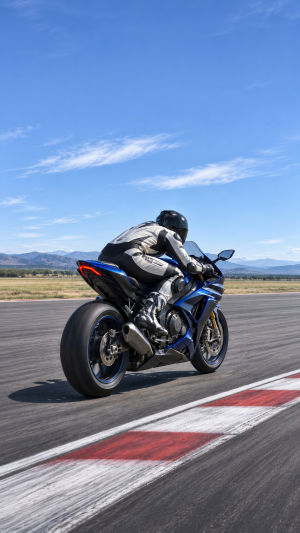
Motorcycle braking requires precision, coordination, and an understanding of road conditions. Even experienced riders can encounter situations that demand sudden or forceful braking.
Anti-lock braking systems (ABS) provide additional control by regulating brake pressure when a wheel approaches lockup, helping the motorcycle maintain traction and stability.
Although skilled riders can achieve effective stops without electronic assistance, ABS offers an important advantage: it automatically manages braking pressure when traction becomes limited. This technology is particularly valuable during unexpected stops and on surfaces where grip can change quickly.
<h3>How Motorcycle ABS Works</h3>
When a rider applies the brakes, the braking force slows the wheels. If that force exceeds the available tire grip, a wheel can stop rotating while the motorcycle continues moving. This condition is known as wheel lockup.
ABS monitors wheel rotation and detects when a wheel is approaching lockup. The system then adjusts hydraulic brake pressure, reducing and restoring it as necessary. This process helps the tire maintain contact with the road while allowing the rider to retain greater steering control.
The adjustments happen automatically and continuously, without requiring the rider to release and reapply the brake lever manually.
<h3>The Technology Behind ABS</h3>
A motorcycle ABS system typically consists of three main components: wheel-speed sensors, an electronic control unit, and a hydraulic pressure-control unit.
Wheel-speed sensors monitor the rotation of the wheels and transmit information to the electronic control unit. By analyzing these signals, the system identifies rapid changes in wheel speed that indicate an approaching lockup.
The hydraulic unit then regulates braking pressure through electronically controlled valves. Once the wheel regains rotation, pressure can increase again to maintain effective braking.
This coordinated process allows the system to respond to changing traction conditions in fractions of a second.
<h3>Why Front-Wheel ABS Matters</h3>
The front wheel provides a substantial share of a motorcycle's braking force. During deceleration, weight transfers toward the front, increasing the load on the front tire and its contribution to stopping.
Maintaining front-wheel traction is therefore essential for steering and stability. If the front wheel locks, the rider can quickly lose directional control.
Many modern motorcycles use two-channel ABS, which monitors and regulates the front and rear brakes independently. This allows the system to respond to the conditions affecting each wheel rather than treating both braking circuits as one.
<h3>ABS on Different Road Surfaces</h3>
Available tire grip changes according to the road surface and weather conditions. Wet pavement, painted markings, gravel, and uneven roads can all influence braking performance.
On wet asphalt, ABS helps prevent wheel lockup when braking force approaches the available traction limit. This can be particularly useful when road conditions change unexpectedly.
Gravel requires a different consideration. On loose surfaces, a locked wheel can sometimes build up material in front of the tire, helping the motorcycle slow down. Conventional ABS may therefore increase stopping distances in certain off-road conditions. Some motorcycles offer specialized off-road settings that adjust ABS intervention to suit loose terrain.
Understanding the available ABS modes and following the motorcycle manufacturer's recommendations help riders select appropriate settings for different riding environments.
<h3>Understanding ABS Capabilities</h3>
ABS supports braking control, but it does not replace proper riding technique or sound judgment. Tire condition, road grip, motorcycle speed, and braking technique all influence stopping performance.
Cornering also requires particular attention because the tires must provide grip for both steering and braking. Standard ABS has limitations when a motorcycle is leaned over, while advanced cornering ABS systems use additional sensors to adapt braking intervention to the motorcycle's position and movement.
Riders should apply the brakes smoothly and progressively, following the guidance in their motorcycle's owner's manual. On ABS-equipped motorcycles, firm and continuous braking is generally appropriate during an emergency stop, allowing the system to regulate pressure automatically.
<h3>Developing Better Braking Skills</h3>
Understanding how ABS operates is an important part of becoming a more informed rider. Professional motorcycle training can help riders practice controlled stops, improve braking coordination, and become familiar with the system's response.
Regular maintenance also matters. Checking tire condition, brake components, and ABS warning indicators helps ensure that the system remains in proper working order.
<h3>Technology That Supports Rider Control</h3>
Motorcycle ABS is an important advancement in braking technology. By monitoring wheel rotation and automatically adjusting hydraulic pressure, it helps maintain traction and steering control during demanding braking situations.
Its effectiveness depends on the motorcycle's design, the road surface, and available tire grip. When combined with appropriate riding techniques and regular maintenance, ABS provides valuable assistance and strengthens the overall braking capabilities of modern motorcycles.


