

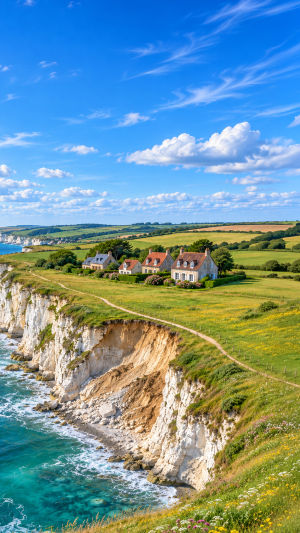
Coastal erosion is becoming an increasingly expensive challenge for European communities. The gradual loss of land threatens residential properties, tourism facilities, transport infrastructure, and important cultural sites. Although coastal areas remain essential to Europe's economy, their exposure to rising sea levels and increasingly severe weather is creating long-term financial risks.
Economic losses associated with coastal erosion already exceed €1 billion annually across 28 European countries. Without effective adaptation, the wider financial consequences could become considerably greater by the end of the century.
<h3>More Than a Quarter of Europe's Coastline Is Eroding</h3>
Coastal erosion occurs when waves, currents, storms, and other natural processes gradually remove sand, soil, or rock from shorelines. Although erosion is a natural process, rising sea levels and changing weather patterns can accelerate land loss and increase the exposure of coastal settlements.
More than 25% of Europe's coastline is already experiencing erosion. The problem is particularly important because coastal regions contribute approximately 40% of Europe's gross domestic product. Tourism, shipping, fishing, property development, and transport networks all depend on functioning coastal environments. Damage to beaches and waterfront infrastructure can therefore affect local employment, business revenue, property values, and municipal finances.
Low-lying coastal areas are especially vulnerable. Around 80% of Europe's low-elevation coastline is considered at risk of future erosion, highlighting the importance of preparing for changes before significant damage occurs.
<h3>Why Traditional Coastal Defences May Not Be Enough</h3>
Seawalls, reinforced embankments, and engineered barriers have traditionally been used to protect vulnerable coastal settlements. Such structures can reduce wave damage and help preserve valuable land, particularly where important infrastructure is concentrated. However, construction and maintenance costs can become substantial. Protective barriers may also interfere with natural coastal processes, sometimes transferring erosion problems to neighbouring stretches of shoreline.
As sea levels continue to rise, some existing structures may require repeated reinforcement or replacement. This creates a difficult financial calculation: the cost of maintaining protection must be compared with the value of the properties and infrastructure being protected.
<h3>Planned Relocation Offers Another Solution</h3>
One approach gaining attention is known as planned retreat. Rather than waiting for severe erosion to destroy buildings or infrastructure, authorities gradually move exposed properties and facilities towards safer inland locations. The approach can involve restricting new construction in high-risk areas, purchasing vulnerable properties, relocating public infrastructure, and providing financial assistance to affected residents and businesses.
France offers an example through the coastal community of Quiberville-sur-Mer in Normandy. A public campsite was relocated inland through an investment of approximately €9 million. Following the relocation, municipal revenue increased by 25%.
<h3>Venice Illustrates the Financial Complexity</h3>
Venice demonstrates how expensive coastal protection can become when valuable historic infrastructure is exposed to rising water levels. Engineered embankments and larger protective barriers have been discussed as possible long-term measures under different sea-level scenarios. Some estimates suggest that a major reinforced structure could require more than €30 billion in initial investment.
Such figures illustrate the financial difficulty of protecting a historically important urban area. Large engineering projects require substantial funding, ongoing maintenance, and careful assessment of environmental consequences. The most suitable strategy may therefore involve combining physical protection with land-use planning, improved monitoring, and long-term adaptation.
<h3>Better Planning Can Reduce Future Economic Losses</h3>
Early preparation is essential because relocating buildings, businesses, and infrastructure requires considerable time. Updated coastal risk maps can help authorities identify areas where erosion is likely to threaten properties and public facilities. Planning regulations can also prevent additional construction in locations where future land loss is difficult to avoid. Buffer zones, temporary land-use arrangements, and financial assistance may provide communities with more flexibility as conditions change.
Natural environments also play an important role. Beaches, dunes, wetlands, and coastal vegetation can help absorb wave energy, support biodiversity, and provide valuable recreational spaces. Allowing these environments sufficient room to adapt can improve long-term coastal resilience.
<h3>Expert Insight</h3>
Fanis Spanos, co-author of the Council of Europe's report on coastal erosion, emphasised the wider importance of protecting coastal areas. He stated: “Europe’s coastlines are among our most valuable assets.”
Europe's coastal erosion problem presents substantial economic and social challenges. More than a quarter of its coastline is already eroding, while rising sea levels threaten homes, businesses, transport networks, and natural environments.
Traditional coastal barriers can provide valuable protection, but they may become increasingly expensive or unsuitable in certain locations. The most effective response will depend on local conditions. Combining risk assessments, responsible development restrictions, natural coastal protection, and carefully managed relocation can help reduce future losses while preserving the economic and cultural value of Europe's coastal communities.


