

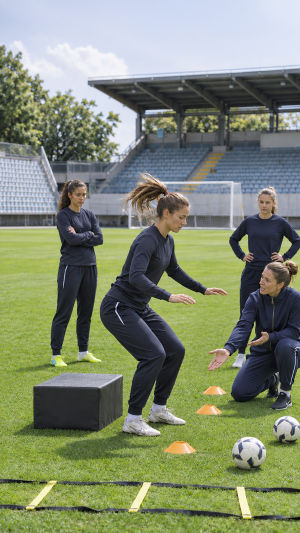
Serious knee injuries have become an important concern in women's football, with several high-profile players facing lengthy periods away from competition. Names such as Leah Williamson, Beth Mead and Michelle Agyemang have brought greater attention to the physical challenges players can experience.
A new research initiative involving the Football Association (FA), Women's Super League (WSL) Football and Imperial College London aims to examine the possible causes and identify practical ways to improve player safety.
<h3>Why ACL Injuries Matter</h3>
The anterior cruciate ligament, commonly known as the ACL, is an important structure inside the knee. It helps keep the joint stable during movements such as turning, jumping and changing direction. When this ligament is seriously damaged, a player may need surgery and an extended rehabilitation period before returning to competitive football.
The impact can extend beyond time away from matches. Players may need to rebuild strength, confidence and movement skills, while clubs must adjust their plans around an unavailable squad member.
Several well-known footballers have experienced this type of injury. England captain Leah Williamson and teammate Beth Mead have both faced ACL rehabilitation, while Michelle Agyemang sustained a rupture in October 2025 during an international match against Australia. Their experiences have helped bring the subject into wider discussions about player welfare.
<h3>A Major Research Partnership</h3>
On November 5, 2026, the FA and WSL Football announced a research project developed with Imperial College London and sports knee surgeon Simon Ball. The FA is funding the PhD research, which will be led by Hanna Lehtovirta, a researcher at Imperial.
The project will invite every club in the Barclays Women's Super League and WSL2 to participate. Players will be involved alongside professionals from medical, coaching and performance departments. One important feature is its focus on the realities of professional football. Previous research has identified several possible influences on ACL injury risk, but many investigations have examined individual factors separately or under controlled laboratory conditions.
<h3>What Researchers Want to Examine</h3>
The investigation will take place in two main stages. The first will involve surveys completed by players who have experienced an ACL injury and those who have not. Researchers will gather information about previous injuries, training demands and match exposure. The questionnaires will also consider hormonal, nutritional and psychological factors. Players who sustained an ACL injury from the 2018–19 season onwards will be compared with uninjured participants to help identify patterns that may be associated with injury risk.
The second stage will involve interviews with players and club staff. These conversations will give participants an opportunity to describe their experiences and explain how injuries are approached within their teams.
Medical professionals and coaches can offer useful information about training schedules, preparation and existing prevention methods. Players can provide another perspective by describing the physical and practical demands they experience throughout a season.
<h3>Understanding the Possible Risk Factors</h3>
ACL injuries do not usually have one simple explanation. Research has considered several possible contributors, including anatomical differences, hormonal influences, muscle coordination, movement patterns and environmental conditions. For example, the way a player lands after a jump or changes direction at speed may affect the forces placed on the knee. Training demands, recovery opportunities and the playing surface may also be relevant areas for investigation.
It is also worth separating increased public attention from evidence of a rising injury rate. A study published in BMJ Open Sport & Exercise Medicine in October 2026 examined long-term data and found no clear increase in ACL injury incidence in elite women's football over a 25-year period.
<h3>Turning Research Into Practical Changes</h3>
The FA and WSL project is intended to produce information that can support future injury prevention, rehabilitation and player welfare strategies. Its findings may help clubs review how they prepare players, monitor workloads and respond to individual needs. The research is not expected to provide an immediate solution. Instead, it aims to build a stronger evidence base that can guide decisions across professional women's football.
By bringing together scientific investigation and the experiences of players and staff, the new FA and WSL initiative takes an important step towards that goal. Its value will ultimately depend on how effectively the findings are translated into everyday practice, helping players train, compete and recover with better-informed support.


