

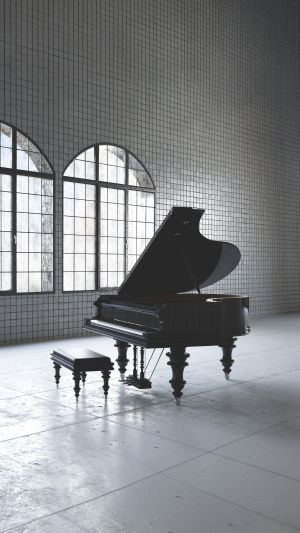
The piano holds a special place in the world of music. From gentle melodies to powerful performances, it can produce an impressive variety of sounds. Whether played alone or alongside other instruments, it offers musicians remarkable creative freedom.
But why is it often called the "King of Instruments"? Its wide range of notes, flexible volume, rich harmonies, and many practical uses help explain why this respected title is so respected.
<h3>A Wide Range of Notes</h3>
One of the piano's greatest strengths is its extensive range. A standard piano usually has 88 keys, spanning the lowest register to the highest. This allows musicians to explore deep sounds and bright melodies using the same instrument.
Compared with most other instruments, the piano covers an unusually broad range of pitches. Only the concert harp offers a somewhat comparable range in this respect.
A pianist can play a deep bass line with the left hand while performing a high melody with the right. These different musical layers combine to create a full and balanced performance.
<h3>Flexible Volume and Expression</h3>
Another important feature is the piano's ability to produce different volume levels. A pianist can play softly to create a gentle atmosphere or press the keys more firmly to produce stronger sounds.
Between these extremes are many levels of intensity. This flexibility allows musicians to shape melodies according to their musical purpose.
The pressure applied to each key affects the volume of the resulting note. Skilled pianists use these changes to make performances more expressive and engaging.
This ability makes the piano suitable for peaceful compositions, energetic pieces, and many musical styles.
<h3>Rich Harmonies and Multiple Notes</h3>
The piano can produce several notes simultaneously, making it especially useful for creating rich harmonies. Unlike instruments that typically play a single melody at a time, it can combine melodies, bass lines, and chords.
A pianist uses both hands and can play with all ten fingers, producing many notes together. Different combinations of keys create a wide variety of musical textures.
The piano also uses equal temperament, a tuning system that divides an octave into twelve equal intervals. This makes it convenient to perform music in different keys and explore changing harmonies.
The sustain pedal adds further possibilities by allowing notes to continue sounding after the fingers leave the keys.
<h3>Accessible for Different Skill Levels</h3>
The piano is often considered an approachable instrument for beginners. Its keys follow a clear visual pattern, helping new learners understand how notes are arranged.
Beginners can start with simple melodies before gradually exploring scales, chords, rhythms, and more challenging compositions.
Experienced musicians can use the same instrument to perform highly detailed pieces. This combination of accessibility and depth makes the piano suitable for people with different musical backgrounds.
<h3>A Helpful Tool for Music Creation</h3>
The piano is useful beyond solo performances. It is widely used for accompaniment, music education, and composition.
Composers often use it to test melodies, explore harmonies, and develop musical arrangements. By playing different combinations of notes, they can hear how individual musical ideas work together.
The keyboard can also help musicians explore arrangements originally written for larger musical groups. Different musical parts can be adapted for a single piano, allowing performers to understand the overall structure.
<h3>Complex Design and Practical Uses</h3>
The piano has a complex internal structure. Its main components include keys, hammers, strings, and other mechanical parts.
When a player presses a key, a mechanism moves a hammer that strikes the corresponding strings, producing sound. This system allows musicians to control individual notes through their finger movements.
Despite its complicated construction, the keyboard provides a straightforward playing experience. Its combination of detailed engineering and practical design makes it a distinctive instrument.
The piano deserves its famous title because of its remarkable combination of musical abilities. Its broad range, flexible volume, rich harmonies, and usefulness in performance and composition set it apart from many other instruments.
From a beginner learning a first melody to an experienced pianist performing a complex composition, the piano offers countless opportunities for musical discovery. Its versatility explains why it remains one of the most valued instruments in the world.


