

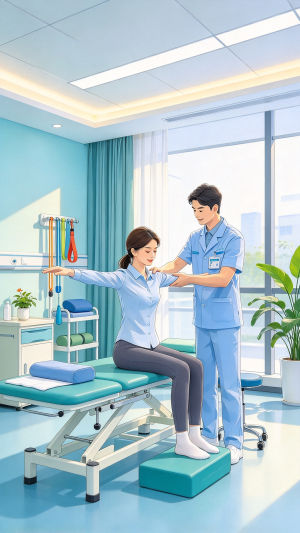
Shoulder rehabilitation is an essential component of physical therapy for individuals recovering from injuries, reduced mobility, or periods of limited physical activity.
Its primary objectives are to restore functional movement, improve muscle strength, and support the return to everyday activities.
A personalized rehabilitation program combines therapeutic exercises, assisted movements, and progressive resistance training according to the patient's condition and functional abilities. Professional assessment helps ensure that each exercise is appropriate for the individual's recovery stage and movement requirements.
<h3>Understanding Shoulder Rehabilitation</h3>
Shoulder rehabilitation focuses on restoring the movement, coordination, strength, and stability of the shoulder and its surrounding muscles. Because the shoulder supports a wide range of arm movements, effective rehabilitation requires a balanced approach that addresses mobility and muscle control.
Improved shoulder function supports everyday activities such as reaching overhead, getting dressed, lifting objects, and completing household tasks. Before beginning treatment, a physical therapist assesses the patient's mobility, strength, and movement patterns to establish appropriate exercises and measurable recovery goals.
<h3>Essential Shoulder Rehabilitation Exercises</h3>
<b>Assisted Arm Elevation</b>
Assisted arm elevation involves raising the affected arm with support from the opposite hand, a physical therapist, or an appropriate exercise device. This technique allows patients to practice controlled movement while gradually developing their ability to raise the arm independently.
The movement is performed within an appropriate range, with attention to positioning and controlled execution.
<b>Active Range-of-Motion Exercises</b>
Active range-of-motion exercises involve moving the arm independently in different directions, including forward elevation, outward movement, and controlled rotation.
These exercises help maintain flexibility, improve movement coordination, and develop the functional control required for everyday arm activities.
<b>Shoulder Rotation Exercises</b>
Controlled inward and outward rotation exercises target the muscles involved in shoulder movement and stability. They help develop coordinated muscle activity and support functional movement.
A physical therapist may initially provide guidance before patients progress to independent practice, adjusting each exercise according to individual capabilities.
<b>Progressive Shoulder Strengthening</b>
Strengthening exercises develop the muscles responsible for controlling and supporting shoulder movement. Depending on the rehabilitation program, activities may involve resistance bands, light weights, or other controlled resistance techniques.
Resistance is introduced gradually to improve muscle strength, endurance, and shoulder stability while supporting functional arm use.
<h3>The Role of Physical Therapist Guidance</h3>
Physical therapist guidance helps ensure that rehabilitation exercises are performed with appropriate positioning, movement control, and technique. During treatment, the therapist observes movement patterns, provides physical assistance when necessary, and adjusts exercises according to the patient's progress.
As coordination and strength improve, assistance can be reduced and exercises can become more independent. This progressive approach helps patients develop greater control over shoulder movement and build confidence in performing everyday activities.
<h3>Proper Positioning and Exercise Technique</h3>
Correct positioning supports effective shoulder movement and helps maintain appropriate muscle control throughout rehabilitation. Depending on the exercise, patients may practice in seated, standing, or supported positions.
Movements should be performed smoothly and within the range recommended by the treating physical therapist. Proper technique also involves maintaining a comfortable posture and avoiding unnecessary momentum during exercise.
Exercise intensity should remain appropriate to the patient's condition and recovery stage. Any significant changes in symptoms or shoulder function should be discussed with the healthcare professional overseeing treatment.
<h3>Benefits of Supervised Shoulder Rehabilitation</h3>
A structured rehabilitation program can support several important aspects of physical recovery.
“After any shoulder problem, it’s important to get movement and strength back.” — NHS inform.
- Improved mobility: Targeted exercises help restore shoulder movement and flexibility.
- Increased muscle strength: Progressive resistance training develops the muscles responsible for shoulder control and support.
- Enhanced coordination: Controlled movements improve coordination between the shoulder and surrounding muscles.
- Better functional performance: Improved arm movement supports activities such as reaching, lifting, and getting dressed.
- Individualized progression: Professional assessment allows exercises to be adapted as the patient's abilities develop.
The results of rehabilitation depend on the underlying condition, initial functional abilities, treatment approach, and consistency of exercise participation.
<h3>Maintaining Progress Through Rehabilitation</h3>
Long-term progress depends on following an appropriate exercise program and maintaining consistency between physical therapy appointments. Patients should practice prescribed home exercises according to their therapist's instructions, with resistance and movement intensity adjusted as their abilities improve.
Regular reassessment allows physical therapists to evaluate functional changes, refine exercise techniques, and introduce more advanced activities when appropriate. Combining supervised sessions with a suitable home program supports continuity of treatment and helps maintain improvements in shoulder function.
Shoulder rehabilitation exercises are an important part of restoring arm mobility, muscle strength, and functional movement. A combination of assisted elevation, active range-of-motion training, controlled rotation, and progressive strengthening addresses different aspects of shoulder recovery.
Through individual assessment, appropriate exercise selection, and professional physical therapy guidance, patients can progressively improve shoulder function and develop the movement control needed for everyday activities.


